SPECIALISTS IN RARE & CULTURALLY SIGNIFICANT BOTANICALS • EXACT TAXONOMIC IDENTIFICATION • VERIFIED BOTANICAL PROVENANCE • RIGOROUS SPECIES SPECIFIC RESEARCH • INDEPENDENT AUSTRALIAN FAMILY BUSINESS
Return to Lao Chai among the Black Hmong, where hemp, indigo, household life, ritual and funerary traditions reveal how knowledge remains alive through practice.
FIELD EXPEDITIONS · LAO CHAI · NORTHERN VIETNAM
Return to the Clouds
Among the Black Hmong of Lao Chai
We went back because something in that valley had stayed with us. What followed was a return to Co, to hemp and indigo, to household life and to moments of ritual and grief that were shared with extraordinary trust.
By Stevan · with Mia and Jaxson · Sacred Plants Australia
Lao Chai was one of the last places we went before the world closed. Then came Covid. Borders shut, international travel stopped and places that had once felt a flight away suddenly belonged to another world. Co did not. We stayed in contact after our first visit, and when travel finally became possible again there was never much question about where we wanted to return.
Mia and Jaxson are with me on every journey, so the three of us went back. Back to Co. Back to Lao Chai. Back to the clouds.
There is something about that valley I have never managed to explain properly. Life in those mountains can be brutally hard. The slopes are steep, winters are cold, homes fill with smoke from household fires and much of ordinary life still requires an extraordinary amount of physical work. Yet what I remember most is not hardship. It is a quieter happiness, a peacefulness that seemed to exist alongside the difficulty rather than because difficulty was absent.
Almost as soon as we arrived, Co did something I have never forgotten. She reached for an indigo plant, crushed the leaves into our palms and rubbed them into our skin until our hands began to turn blue. Her instruction was simple: if we wandered away and somebody stopped us, we could show them our hands and they would know we were allowed to be there.
Before we had entered a house, a plant had marked us as welcomed guests.
RETURN
Back to Co
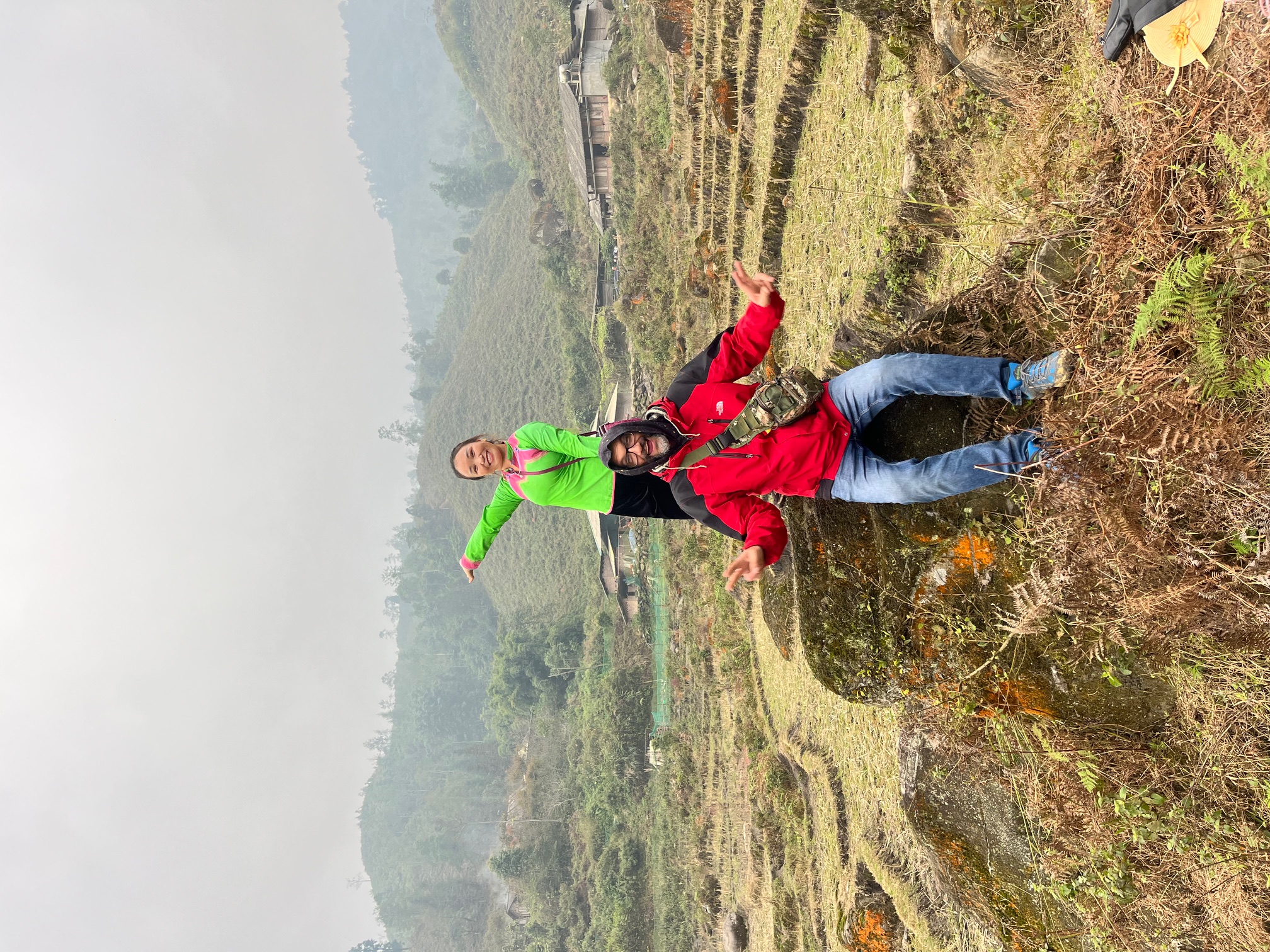
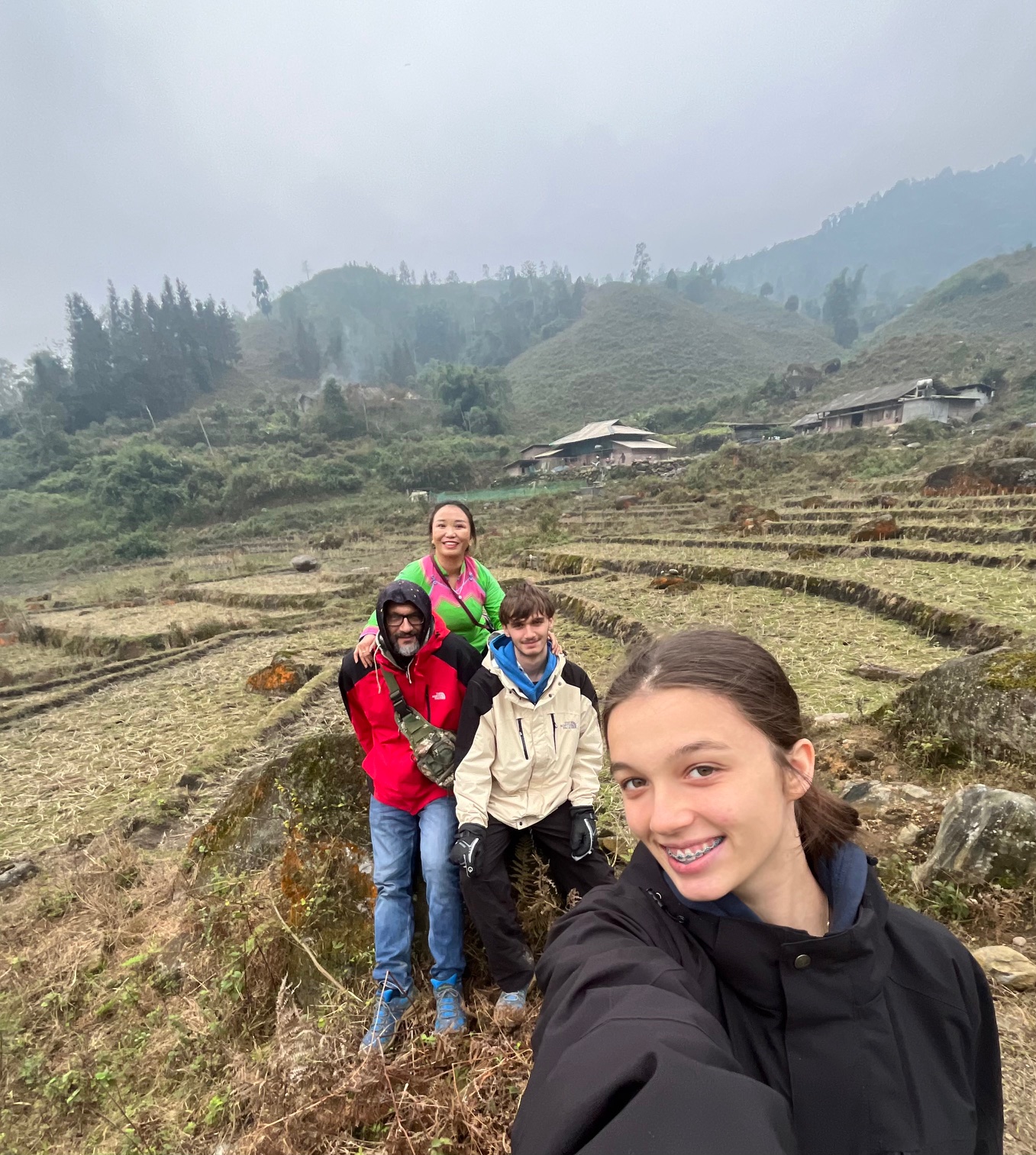
The reason to return was never only landscape. It was relationship. Co had been the human connection between our first visit and the years when returning was impossible. Seeing her again made the journey feel less like arriving somewhere new and more like picking up a thread that had never completely broken.
That mattered because everything we were later shown depended on people deciding that we could remain close. Homes, textile work, household routines and ritual were not ours by right. They were things people allowed us to witness.
The photographs from the reunion are ordinary in the best possible way. No stage, no performance, no grand expedition pose. Just the awkward happiness of seeing somebody again after a long separation.
PLACE AND MEMORY
What a People Carry
The Hmong story reaches far beyond Lao Chai. For generations, much of what Hmong communities knew about their past travelled through people rather than through a single central written historical tradition. Elders, songs, clan memory, ritual and oral history carried accounts of conflict, movement, loss and continuity.
Among those memories are stories about the loss of writing. One tradition remembers books disappearing while people fled their enemies. Another connects what remained of that knowledge with paj ntaub, the decorative textile arts often translated as flower cloth. Those traditions are not archaeological proof. Their value is different. They show how communities remember loss, movement and the determination to carry something forward.
Historical research approaches the past from another direction and describes successive movements of Hmong families and clans south from China into mountain regions of Vietnam, Laos and elsewhere in mainland Southeast Asia. There was no single migration on a single date. Families moved at different times and under different pressures. Over generations, mountains reached through movement became home.
HOUSEHOLD LIFE
The House Above the Fire
Inside one home, corn was stored above the internal fire and smoke to dry. It is a small detail, but it stayed with me because it makes the relationship between plant, food, architecture and work visible in a single frame.
Heat was not merely for comfort. Smoke was not simply an inconvenience. Food storage, cooking, warmth and the structure of the house belonged to the same practical system.
That room gave scale to everything that followed. Plants were not being introduced to us as abstract ethnobotany. They were already present as food, fibre, colour, fuel and work.
INDIGO
Blue Hands, Deep Knowledge
At first the blue on our hands meant only one thing to us: we were Co's guests. Later, after watching cloth being made, it became connected to a much larger body of knowledge.
Indigo work depends on preparation, timing, repeated handling and the ability to read what a working dye process is doing. We did not identify the plant used in the particular vat we saw to species, so I will not assign one now. What we did see was confidence born from practice.
The colour was the visible end of a process that began long before the finished textile. That made Co's first gesture feel even more meaningful. A plant had marked us as welcomed guests, then the same colour kept returning as we were shown how cloth was made.
HEMP · WAX · INDIGO
Cloth Begins in the Ground
Back in Lao Chai, none of the history arrived as a lecture. It appeared through people's hands. We watched hemp being processed. Mia and Jaxson were shown how fibres were worked and joined. They sat close to people who knew the sequence through repetition: fibre, thread, cloth, wax, dye and finishing.
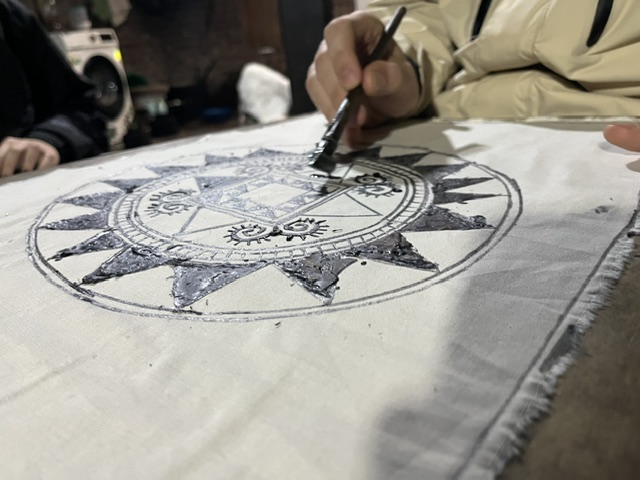
Traditional Black Hmong clothing begins long before anyone puts on a finished garment. It begins in soil. Hemp is grown and harvested. The stalks are processed for bast fibre. Fibre becomes cord or thread. Thread becomes cloth. Wax creates the resist pattern. Indigo creates colour. Stitching, joining and finishing come later.
By the time a garment is worn, most of the labour that made it possible is already invisible. What remains visible is the surface, yet the surface contains agriculture, plant knowledge, chemistry, geometry, hand skill and patience.
Three field clips show the central sequence.
Hemp fibre
Plant fibre is worked and joined into usable cord.
Wax resist batik
Wax marks the cloth before dyeing and protects the pattern beneath it.
Indigo and reveal
Dye builds the dark field, then heat releases the wax and reveals the design.
LEARNING BY DOING
What the Work Holds
Technique alone does not explain why the cloth matters. Mia and Jaxson were shown parts of the process directly. That is the part I remember most clearly. Knowledge was not separated from the person doing the work. The feel of fibre, the movement of a batik tool, the condition of cloth and the sequence of each step were taught through proximity and practice.
That is why the word costume feels inadequate. A finished garment is not decoration sitting outside daily life. It brings agricultural knowledge, hand skill, design and teaching into the same material object.
Whether old stories about lost writing and cloth are read literally or symbolically, the deeper idea remains powerful: knowledge can survive because people keep carrying it. Sometimes that knowledge becomes visible in what they make.
Being shown the work
Learning came through watching, trying and being corrected.
At the loom
Thread becomes cloth through another layer of learned handwork.
MATERIAL MEMORY
Before Indigo
The finished wax patterns are striking even before the cloth enters the dye. Seeing them at that stage makes the logic of resist work easier to understand. The design exists in wax before it exists as contrast.
Once the cloth is dyed and the wax is removed, the pattern emerges through absence. The colour surrounds the places protected from it.
That simple relationship between fibre, wax and dye is one of the strongest ethnobotanical threads in the whole expedition because every stage depends on plant material being transformed by knowledge.
INSIDE THE FAMILY HOME
When the Story Entered the House
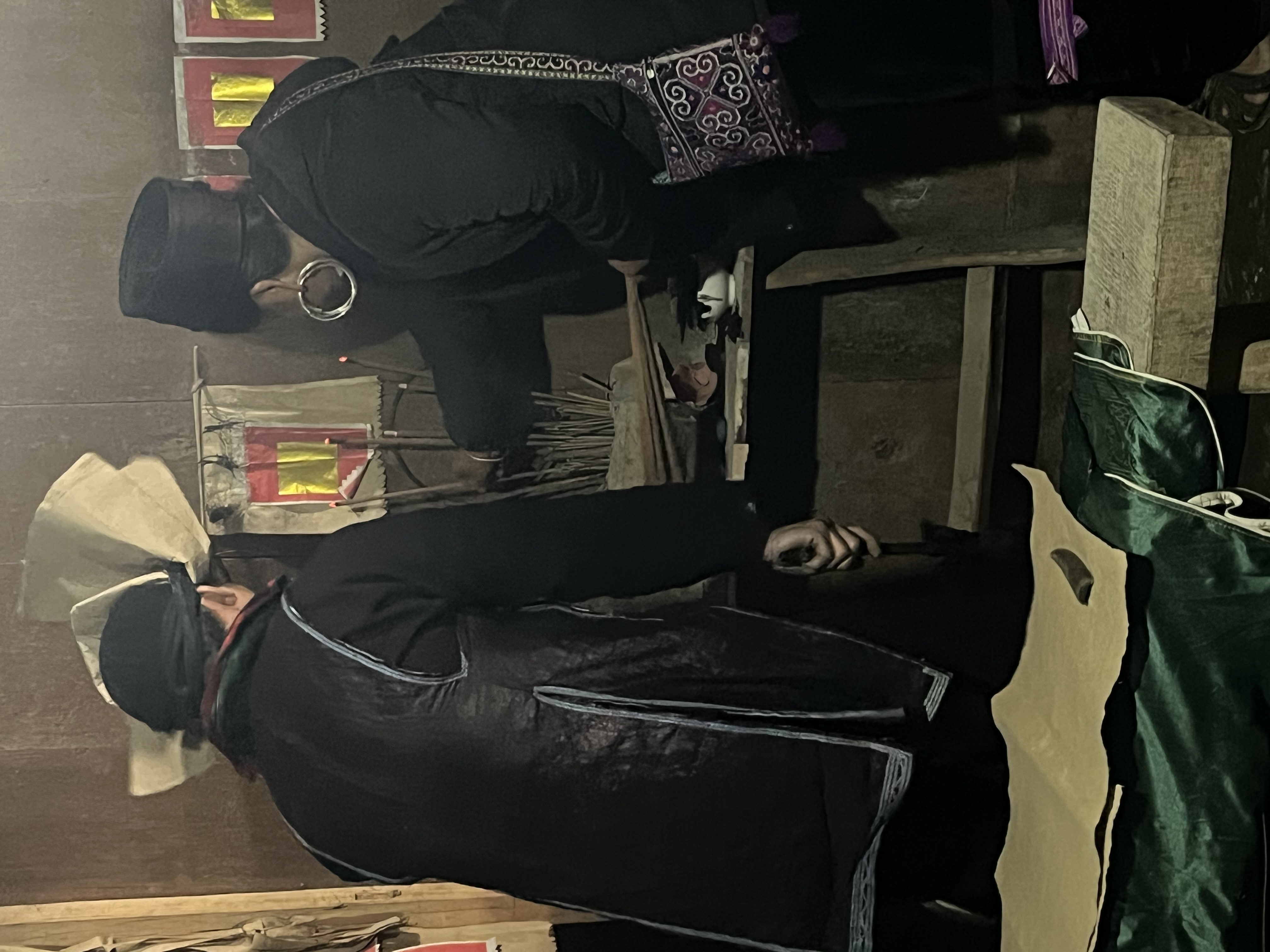
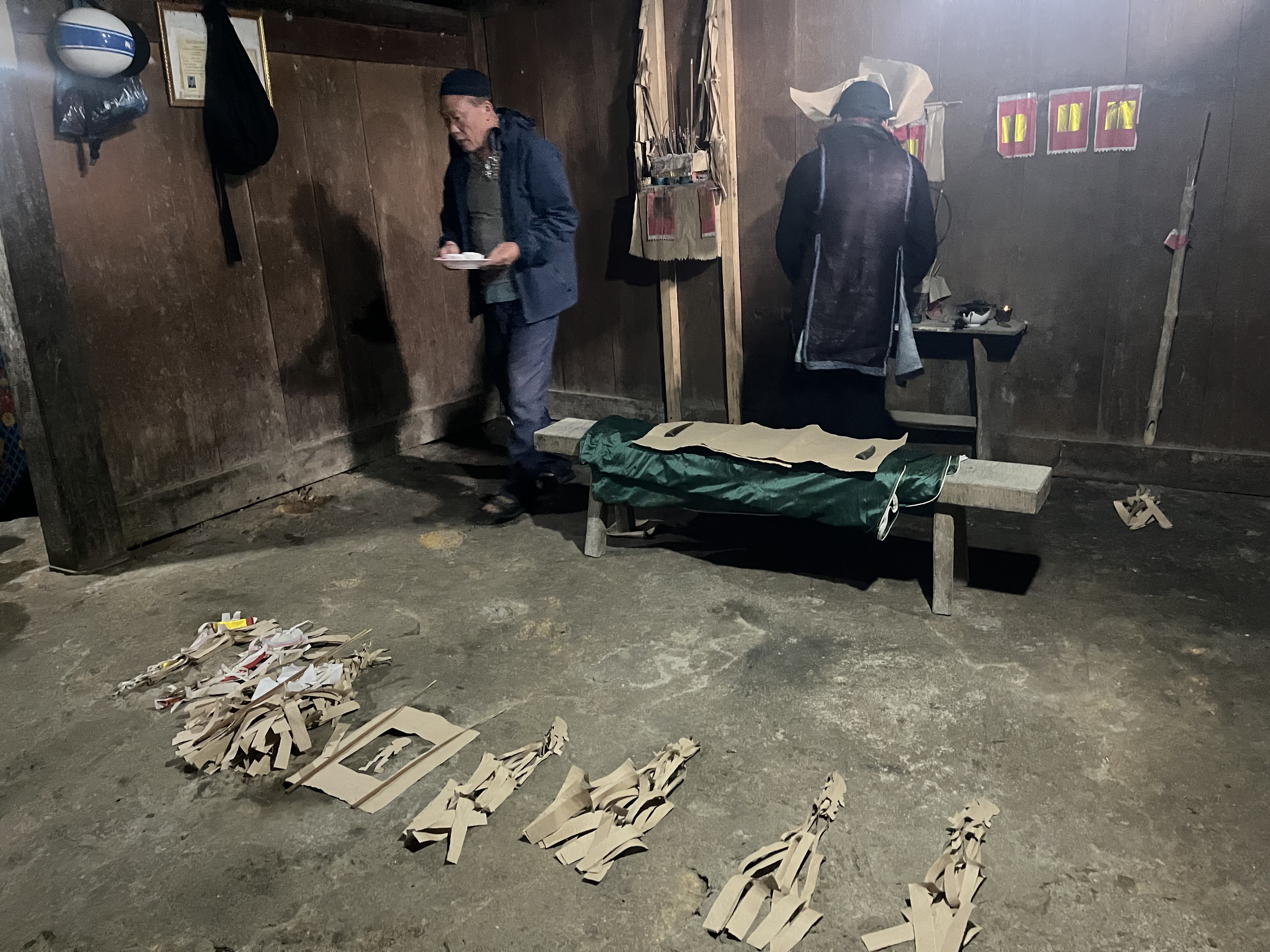
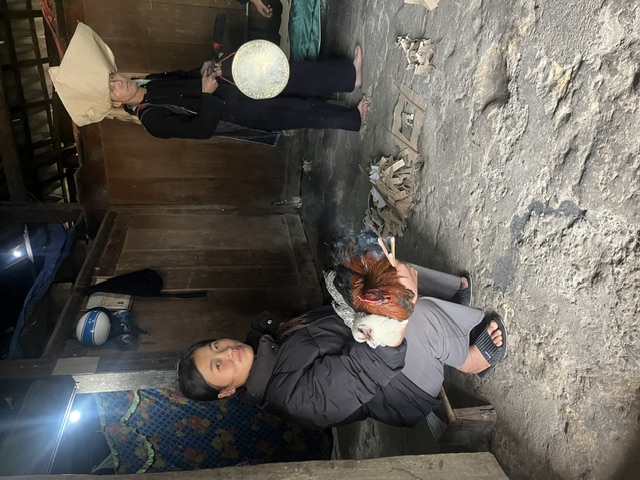
Then our time in Lao Chai moved somewhere we had not expected. We were invited into a family home where a man was unwell and a Hmong shaman had been called.
The room was dark and warm from the household fire. A gong sounded through the timber house. Ritual paper was arranged. Divination pieces were cast onto the floor. We understood enough to know that this was not being performed for us. We were visitors inside a family's response to illness.
The safest way to write about that afternoon is to distinguish what we saw from what comparative Hmong sources can explain. We saw a family, a shaman, a gong, paper forms, divination and ritual movement. Research can help explain the wider material culture. It cannot translate every gesture in this family's ceremony.
ROOJ NEEB
The Shaman's Horse
And then there was the bench. An ordinary looking narrow wooden seat. To an outsider, furniture. Within Hmong shamanic practice, the rooj neeb may be understood as the shaman's horse, the physical counterpart of a spirit mount used during ritual travel.
Descriptions of Hmong shamanic practice also note the sound and movement created as the practitioner steps and jumps on the bench. Once you understand that, the footage changes. The object in the room no longer sits in the background as furniture. It belongs to the ritual logic of movement, rhythm and travel.
I can describe that wider context. I cannot claim that every movement recorded in this house carries exactly the same meaning as every description from another Hmong community.
A Boundary Worth Keeping
Some parts of that afternoon were explained to us. Other parts were not. I would rather leave a gap than fill it with somebody else's ceremony and present that explanation as ours. Being present gave us a view into the room. It did not make us insiders.
THE FOLLOWING DAY
A Celebration of the Soul
The following day, a man had died and we were invited to his funeral. The English words used locally to explain the gathering to us have stayed with me ever since: a celebration of the soul.
There was grief, but grief was not the only thing happening. People gathered. Food was prepared. The clear local spirit everyone called happy water moved through tiny glasses. People cried, talked, ate, drank and worked.
The grief was real. So was the work of carrying it together.
What struck me most was that death had not simply removed somebody from the community. It had given the living something to do. There was a family to support, food to prepare, guests to receive and obligations to fulfil.
FUNERARY TRADITION
Showing the Way
While researching what we had witnessed, I learned about Qhuab Ke, often translated as Guiding the Way. In documented Hmong funerary traditions, the deceased is addressed and the soul is instructed in the journey ahead.
I cannot tell you whether a particular chant we heard that day was Qhuab Ke. I do not know. I would rather leave that uncertainty intact than make the experience tidier than it really was.
Learning about the tradition changed the way I remembered the gathering. For people whose history contains generations of movement, the idea of the dead being shown a road towards the ancestors carries an extraordinary resonance. The map does not have to exist on paper. Someone remembers it. Someone speaks it. Someone shows the way.
Music That Speaks
The Hmong qeej belongs to this same funerary world. It is a free reed mouth organ, but calling it simply a musical instrument misses much of its role. Hmong is a tonal language and qeej phrasing can be closely connected with speech contours. In funerals, particular pieces are associated with guiding and instructing the deceased.
Once you know that, music is no longer simply accompanying the ritual. It is participating in it.
What We Could Not Translate
Much of what happened around us was intelligible to people who belonged there in ways that were not available to us. That is an important part of the record too. Documentary honesty is not only about what can be explained. It is also about knowing where explanation stops.
THE ROAD HOME
What Changes, What Remains
None of this means Black Hmong life is frozen in some ancient past. It is not. Roads, tourism, education, commerce and technology are changing these valleys. The people themselves are changing them too.
Cultures survive not because nothing changes, but because people decide what still matters as change arrives. In Lao Chai, we saw old knowledge alongside mobile phones, road building, tourism and the ordinary movement of contemporary life.
Lao Chai was one of the last places we went before Covid closed the world. When travel became possible again, it was one of the places we most wanted to see. Some places you visit and leave behind. Others follow you home.
What Stayed
For all the extraordinary things we witnessed, the memories that return most often are surprisingly small: Co laughing with us, Mia concentrating over cloth, Jaxson learning by doing, corn above smoke, a warm fire in a dark house, a gong vibrating through timber walls, tiny glasses passed through a grieving gathering and cloud moving across the valley until part of the mountain disappeared.
What stays with me is not the feeling that we discovered something hidden. It is the memory of people making room for us while continuing to live their own lives. That kind of welcome deserves accuracy more than romance.
We went back to the clouds. What stayed was the trust.
Choosing a selection results in a full page refresh.